GOVERNMENT POLYTECHNIC, ADITYAPUR

    Approved by AICTE, New Delhi, DHTE, Govt. of Jharkhand & Affiliated to JUT Ranchi

Home Academics Departments Metallurgical Engineering

Department of Metallurgical Engineering

The Department of Metallurgical Engineering, established in 2000, has been at the forefront of providing quality education and practical skills in the field of metallurgy. As one of the core branches of engineering, Metallurgical Engineering is crucial for the extraction, processing, and development of metals and materials used in a wide range of industries, including automotive, aerospace, power, and manufacturing.

The department offers a 3-Year Diploma in Metallurgical Engineering, focusing on the principles of material science, metal extraction, alloy design, and industrial metallurgy. Our program blends strong theoretical foundations with extensive practical training, ensuring students are equipped to tackle challenges in the metals and materials industry.

With a team of experienced faculty members, modern laboratories, and state-of-the-art infrastructure, the department plays a pivotal role in shaping the future of metallurgical engineers. We focus on developing students’ problem-solving abilities, practical skills, and industry-oriented knowledge to ensure they are industry-ready upon graduation.

Computer Science & Engineering Department
Vision Icon

Vision

To be a center of excellence in Metallurgical Engineering education, fostering innovation and producing globally competent metallurgists who will contribute to sustainable technological advancements in the metals and materials industry.
Mission Icon

Mission

  • To provide high-quality education in Metallurgical Engineering, with a strong emphasis on both fundamental principles and industry-specific applications.
  • To equip students with practical skills in material characterization, metal processing, alloy development, and heat treatment through hands-on training and lab work.
  • To promote innovation and research in the field of metallurgy, encouraging students to engage in projects that address current challenges in materials engineering, recycling, and sustainability.
  • To develop ethical and responsible engineers who can contribute to society with safe, sustainable, and efficient metallurgical practices.
  • To foster lifelong learning by providing students with the foundation to pursue higher education, professional certifications, and leadership roles in the field of metallurgical engineering.

Program Specific Outcomes (PSOs)

Upon successful completion of the Diploma in Metallurgical Engineering, students will be able to:

  • PSO1 – Metal Extraction and Processing: Apply the principles of material science and metallurgical engineering to extract metals from ores, design and optimize metal processing techniques, and improve metal quality in various industrial applications.
  • PSO2 – Alloy Development and Heat Treatment: Demonstrate the ability to design and develop alloys with specific properties through alloying, and apply heat treatment processes to enhance the mechanical properties of metals and materials.
  • PSO3 – Material Characterization and Testing: Utilize various techniques for the characterization and testing of metals and materials, including mechanical, thermal, and chemical properties, to ensure their suitability for industrial applications.
  • PSO4 – Problem-Solving and Innovation: Use critical thinking, problem-solving, and innovative approaches to address challenges in the metallurgical industry, including materials selection, metal recycling, and sustainable practices.

Program Educational Objectives (PEOs)

The Diploma in Metallurgical Engineering program aims to produce graduates who will:

  • PEO1 – Core Knowledge and Practical Skills: Develop a solid understanding of the fundamental principles of metallurgy, including material science, metal extraction, and processing, enabling graduates to effectively contribute to the metals industry.
  • PEO2 – Industry-Ready Professionals: Equip graduates with the necessary hands-on experience and practical skills in material characterization, alloy design, heat treatment, and manufacturing processes to be immediately employable in the metallurgical and materials industries.
  • PEO3 – Ethical Responsibility and Sustainability: : Instill in graduates the values of ethical responsibility, environmental sustainability, and safety practices, encouraging them to apply these principles in all aspects of their professional work.
  • PEO4 – Lifelong Learning and Career Growth: Prepare graduates for continuous professional development, leadership roles, and higher education, allowing them to stay abreast of evolving trends and technologies in metallurgy and materials science.

Metallurgical Engineering Laboratories

The Metallurgical Engineering Department is equipped with modern laboratories that provide students with invaluable hands-on experience. These labs are designed to give students a practical understanding of metallurgical processes, material testing, and metal production. Some of the key laboratories include:


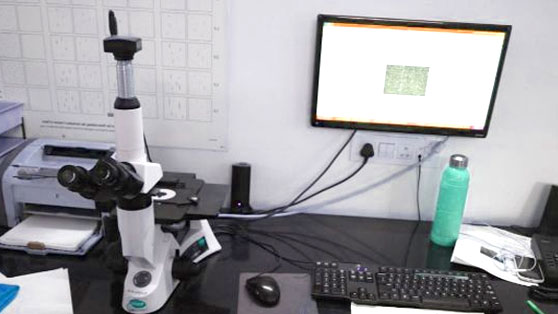
  • Physical Metallurgy Lab: This lab focuses on the study of microstructure, mechanical properties, and the behavior of different metals and alloys. Students use optical microscopes and other equipment to observe and analyze metal samples and conduct experiments to understand their characteristics under various conditions.
  • Metal Extraction and Refining Lab: In this lab, students learn about the processes of extracting metals from ores and refining them to produce high-quality materials. The lab is equipped with furnaces, reactors, and other specialized equipment for conducting extraction experiments and evaluating metal purity.
  • Heat Treatment Lab: The Heat Treatment Lab is used to study the effects of different thermal processes (such as annealing, quenching, and tempering) on metals and alloys. Students conduct experiments to understand how heat treatment affects the hardness, strength, and ductility of metals.
  • Material Testing Lab: This lab is dedicated to testing the mechanical and physical properties of materials, such as tensile strength, hardness, fatigue resistance, and impact toughness. Students perform tests on metals, polymers, and composites to assess their suitability for various applications.
  • Foundry Lab: In the Foundry Lab, students gain hands-on experience with casting processes, including sand casting, investment casting, and die casting. The lab is equipped with furnaces, molds, and other tools to simulate industrial casting operations.
  • Non-Destructive Testing (NDT) Lab: The NDT Lab allows students to learn about techniques for inspecting and evaluating materials without damaging them. Methods such as ultrasonic testing, magnetic particle testing, and radiography are taught to assess material integrity and detect defects.
  • Casting and Welding Lab: This lab provides students with practical experience in various metal joining techniques, including welding, soldering, and brazing. It is equipped with welding machines, casting molds, and other tools to create and test welded joints and cast parts.
  • Corrosion and Surface Engineering Lab: Students in this lab study the various mechanisms of corrosion in metals and materials and explore different surface treatments, such as coating, plating, and anodizing, to enhance material performance and durability.

Top Recruiters of GPA

Aditya Birla Jindal Steel JSW Steel L&T RKFL Tata Power Viraj Steel Evision CEAT Infaya Apollo Tyres Layam Narsingh Ispat